

INTERSTITIALITY IN EDUCATION: REFLECTIONS ON THE "IN-BETWEEN"
- Courtney Koopman

- Apr 29
- 7 min read
Updated: Apr 30
My Scholarship Experience and Considerations of How Context Shapes Our Perspective of Opportunity

“What does that even mean?”
With so many buzzwords doing the rounds in the youth development space, I find myself asking “What does that even mean?” a lot in meetings and workshops, whenever someone tries to get buy-in on yet another new concept or trend. The first time I encountered the word interstitiality during my thesis research, I thought it would be another one of those. The more I read about it, the more I grew an appreciation for what this word was asking me and those in the field of futures studies to reckon with:
Interstitiality refers to "the state of existing in the 'in-between' spaces, times, or conceptual gaps, often acting as a bridge between established systems or positions." Behind all the dressed up academic language, I finally found another way to summarize what so many, particularly young people, have been navigating for as long as humans have experienced adolescence. The strange, and often uncomfortable, in-between.
Of course, transition and growth are part of all our lives, when we think of any significant shift or change in our experience. Whether it is through moving to a different home, starting school, making new friends, or finding a trustworthy hairdresser in the area. If we are lucky, we have someone to guide and support us through this transition - through coaching, comfort, or practical tools that help us get through the experience mostly unscathed. Some of these transitions and in-between navigations are bigger than others, but all are felt through the lenses of our experiences, circumstances, and worldviews. Especially if you’ve had a bad haircut. Then the in-between is REALLY uncomfortable.
In all seriousness, I can recall a significant experience of interstitiality in the broader socio-economic sense, as a 13-year-old leaving the Cape Flats to attend an exclusive high school on the other side of the country. This kind of transition required a significant amount of support and guidance in order for me to make the most of this experience, not just academically, but simply as a young black girl moving through an environment my ancestors built but were denied access to.
The reality is, most of us don’t have healthy, consistent examples of this guidance or leadership. I was fortunate to have parents who were present and active in their support of me, regardless of the available resources or lack thereof. For hundreds of thousands of young South Africans, this is a privilege unseen and unfelt. On the edge of this spectrum, we have had up to 30,000 households in South Africa that are child-led in recent years, where as many as 70% of these homes were headed by teens between 15 and 17 years old.
Context is key
When thinking about the education crisis in South Africa, we often discuss it in relation to the past, tightly hinged to the inertia of Apartheid engineering and the deeper colonial inheritances that came before. As someone who has walked a similar path to some of our Blue Chips, I have had to navigate the sharp contrast between the engineering of my home environment and that of the environment of opportunity I was fortunate enough to access. My primary world was an intentionally designed labyrinth, with one way in and one way out to maximize state police control. Many townships across South Africa follow this infrastructural recipe, used to relocate those previously displaced by the Group Areas Act of 1950.
The Bantu Education Act of 1953 further embedded disparity, violence, erasure, and suppression within schools across the country. By weaponizing the Afrikaans language against black students and enforcing it as the primary language of instruction, the Apartheid regime further established a hierarchy of learning while reserving meaningful learning resources and infrastructure for white-only progress.
So much was lost and disrupted by violently enforcing mass displacement, linguistic suppression, and resource deprivation. As we have seen in the ongoing global conflicts from Gaza to Sudan, where countless youth are navigating unfathomable circumstances across several contexts. Although innovative and resourceful even under the worst circumstances, my immediate environment could only present me with so much. In primary school, I was fortunate to have had incredible teachers and mentors who encouraged me to dream beyond the limitations and hostilities of my environment. This became the catalyst for choosing a different future for myself and imagining what could be possible for others.
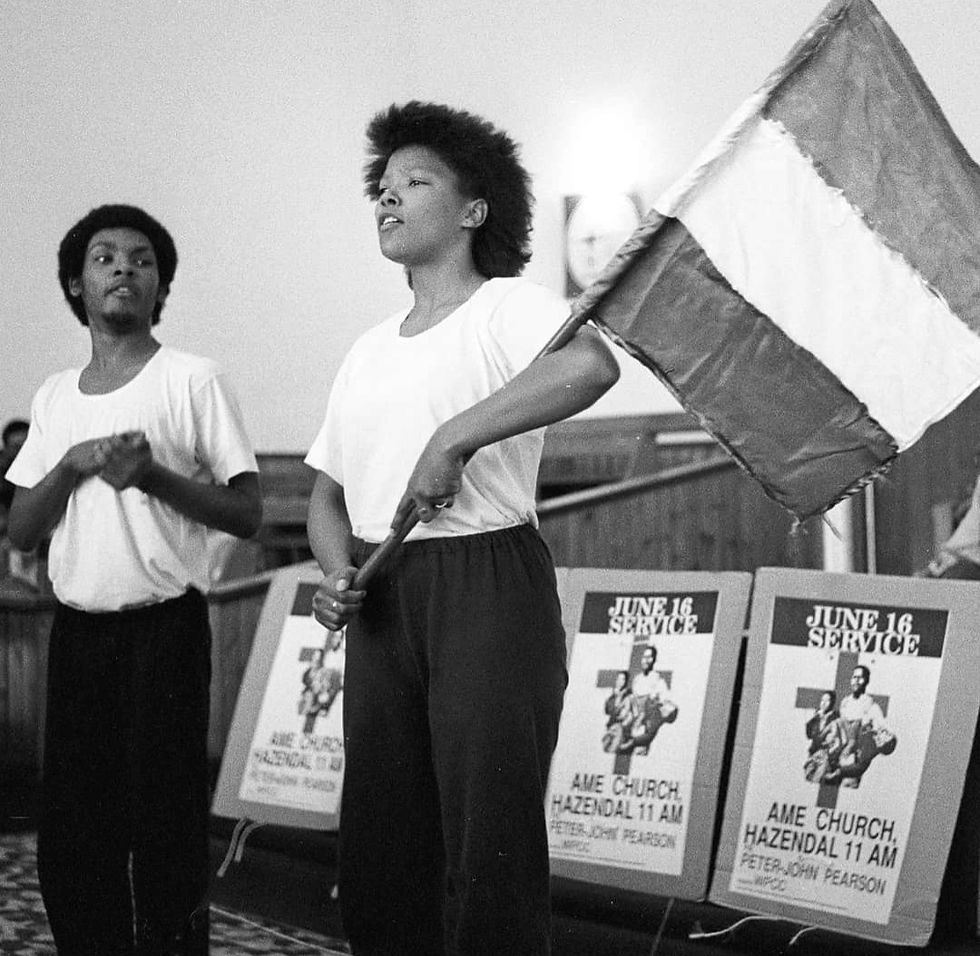
Where I come from, teenage pregnancy, gang violence, and public drug and alcohol abuse were common break time observations. It became part of the trajectory many young girls and boys were on. With this as the pending script for my future, I applied for opportunities far beyond what I thought was attainable for someone like me. I figured anything was better than succumbing to the hostile reality around me. After countless interviews, entrance exams, and evaluations, I was able to secure a high school scholarship that completely changed my life. It gave me a window into a world engineered in a completely different way on every level. Imagine the contrast going from this small, under-resourced primary school on the Cape Flats with up to 40 little bodies in a classroom, sitting on broken, tattooed benches, to one of the most well-resourced boarding schools in the country.
The cost of contrast
I was tasked with moving between two very different realities, instructed to make my family and broader community proud (no pressure!). At the same time, I was told that I was not expected to thrive in this environment of elite excellence, since I came from "one of those schools nobody knows about". Moving in between these starkly different environments was quite jarring at first, as it challenged all the threads of my identity and how I was perceived.
The environment I grew up in was initially designed to keep and control a traumatized labor force, while the other environment I now had access to prepared future global executives and powerful socio-economic influencers this very labor force was designed to serve. It was a difficult thing to reconcile and navigate with a sense of clarity, as I didn’t quite fit into either of these worlds once I accepted this opportunity to move between them.
On the one hand I had the chance of a lifetime, in a space that had so much to offer, despite that same space often rejecting, mocking and disregarding me and what I stand for. I was also seen as an outsider once I came home, as I couldn’t fully relate to the coming-of-age experiences my peers were having while I was away. Every few months, I would have to relive the pains of transition moving between these two worlds, coming into a deeper understanding of what I was going through the older I got.
It was a daily demonstration and an unforgiving reminder of the ongoing disparity and fracture within post-Apartheid South Africa. My new classmates had parents with important CEO titles, who took family holidays abroad twice a year with passports that allowed them access to different parts of the airport. They didn’t just fly planes, they owned them. People who looked like me were generally considered staff, not colleagues. This was no ordinary "level up to the middle-class" fever dream most folks from my neighborhood talk about. This was completely on the other side of the world-building spectrum.

It was my first conscious reckoning with the experience of interstitiality, of feeling completely dislocated from any single reality due to moving between the two so often and having to account for my participation on both sides. At thirteen, I was expected to successfully and maturely navigate these two highly conflicting worlds: one of poverty, scarcity, and hostility at scale, and another of blatant and normalized opulence.
Unfortunately, imbalanced expectations of academic excellence, grappling with variations of survivor's guilt, institutional racism, and all the micro- and macro-aggressions that come with attending an elite learning organisation are not isolated experiences to me. Dealing with institutional violence and isolation at a young age is something I have seen many scholarship students continue to face while moving through environments of opportunity. I knew what it was like to be on the other side of the spectrum too, coming from a school with no functional library, never mind whiteboards or tech in classrooms.
On both sides, a sharpness persisted that constantly pointed to the architecture of exclusion, and a reminder of the intentional design of disenfranchisement. Despite being thirty-plus years into our democracy, many South African schools and other learning institutions are still confronted with the lingering attitudes, traditions, and institutional frameworks of Apartheid. This remains true both on the exclusive, well-resourced side and the side clinging to the bare minimum. Add the compounding challenges that have emerged in recent years, and you have a cocktail for exacerbated youth mental health challenges and poor academic performance among many other wicked problems that still affect the generations before just as pertinently.
These circumstances underpin just how important structures of consistent support are within the youth development space, particularly when we think of capacitating young scholars within spaces that were not designed with them in mind. It stresses just how impactful mentorship and other personal leadership development experiences are as part of broader ecosystemic interventions. Being mindful of the interstitial experience of youth navigating change at this time is critical in order to build more accessible and equitable learning opportunities and experiences not just in South Africa, but across the Global South.
The "how" matters just as much as the "what"
As a futurist, I believe the heart of my work is geared towards building more radical learning ecosystems that are robust and comprehensive enough to capacitate all youth navigating significant change. It is not just about supporting the ones who are lucky enough to secure funding and other resources to facilitate access to opportunity. We have to capacitate access within environments of opportunity for it to be meaningful and sustainable, while also expanding our perspective of what that is and where opportunity can be identified or created. Empowering youth goes beyond giving them standardized resources necessary to flourish. It is about consciously and consistently asking them, as well as ourselves, what is needed in the in-between to unlock their full potential, regardless of the environment they find themselves in. Only if we better understand their context and meet those needs effectively, can we begin to build and access more sustainable learning ecosystems.
Youth empowerment interventions require us to be more present and intentional about the process of capacitating - that means getting comfortable reckoning with the in-between and what we are able to challenge, develop, innovate, and co-create from a place of empowered transition and positive change.
I understand the divide although I have never lived it. All school learners who attend township schools need an afterschool program where they can get help with literacy and numeracy, mentorship, homework help, food, career advice as well as internet access for research to do assignments. There exists a program like this in Fisantekraal, near Durbanville and it is run by Urban Edge Church.